
Most POSH training walks committees through timelines, evidence standards, and documentation. Very little of it prepares anyone for the moment a complainant has a panic attack mid-hearing, or a respondent’s hands shake too badly to hold his own statement. Mental health support during a POSH inquiry rarely gets discussed, yet it shapes how well the whole process actually works.
Moreover, the POSH Act, 2013 does not spell this out in detail. That silence leaves committees improvising in exactly the moments where a wrong move causes real harm.
What You’ll Learn in This Guide
This article covers:
- Why mental health support isn’t legally mandatory, but is increasingly expected
- What trauma-informed practice actually looks like during a hearing
- Why this consideration applies to respondents too, not just complainants
- Where support ends and delay tactics begin
- How to build this into policy before a real case forces the question
Mental Health Support: Not Mandatory, But Increasingly Expected
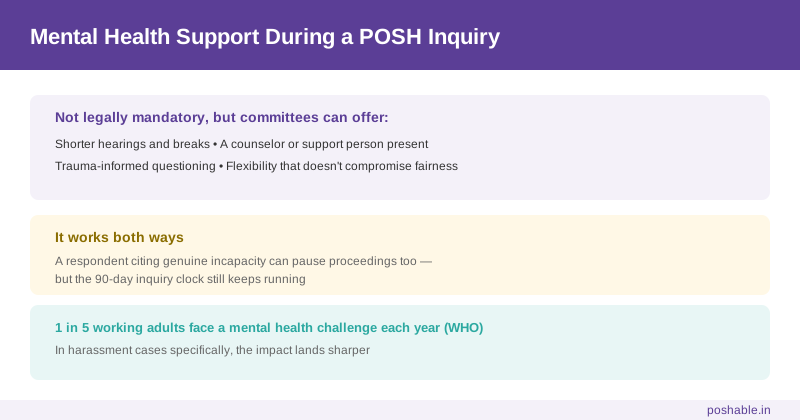
The Act itself does not explicitly require counseling or psychological support during an inquiry. However, Internal Committees can permit a counselor, family member, or mental health professional to accompany a complainant, particularly in cases involving real trauma. Consequently, the absence of a strict legal mandate does not mean this consideration sits outside what a well-run committee should actually offer.
What Trauma-Informed Practice Actually Looks Like in an Inquiry
Shorter hearing sessions instead of one long sitting. Scheduled breaks built into the process. A support person present during questioning. Adjusted pacing when someone visibly struggles to continue. None of this changes what the inquiry ultimately finds. It changes whether the process retraumatizes someone on the way there.
Mental Health Support Isn’t Just for the Complainant
This point gets overlooked constantly. A respondent facing serious allegations experiences real psychological strain too, and natural justice means his ability to participate meaningfully matters just as much as the complainant’s. Genuine mental health support during a POSH inquiry has to account for both parties, not just the person who filed the complaint.
When a Respondent Claims They’re Not Fit to Participate
If a respondent produces medical documentation showing genuine incapacity, the committee can pause proceedings until he’s fit to continue. This isn’t a loophole. It’s the same natural justice principle that protects every other part of a fair inquiry.
Where Support Ends and Delay Tactics Begin
However, committees need real judgment here too. Statutory timelines, ninety days for the inquiry, ten days for the final report, still apply regardless of how sympathetically a committee wants to handle things. Genuine accommodation looks different from repeated, undocumented claims of incapacity used to stall a process that isn’t going someone’s way.
Mental Health Support and the 90-Day Clock
This tension is real, and pretending otherwise doesn’t help anyone. A committee can build in breaks, shorter sessions, and reasonable accommodation while still moving the case forward within its statutory window. Mental health support during a POSH inquiry means adjusting how the process runs, not indefinitely suspending it.
What a Support Person Can and Cannot Do During Proceedings
A support person can sit with the complainant or respondent, offer reassurance during breaks, and help someone regulate before continuing. What they generally cannot do is speak on that person’s behalf, answer questions directed at the party themselves, or otherwise participate as if they were a witness or representative.
Building This Into Policy Before You Need It
Waiting until a crisis moment mid-hearing to figure out whether a counselor can attend is the wrong time to decide. A written POSH policy should state upfront that committees may permit a support person, describe roughly what that looks like, and give Internal Committee members enough guidance that they aren’t improvising alone under pressure.
Common Mistakes Committees Make Around This Issue
- Treating any request for a break or support person as a delay tactic by default
- Never training committee members on trauma-informed questioning at all
- Applying flexibility to the complainant only, ignoring genuine respondent distress
- Having no written guidance, so every committee handles this differently
What Genuine Trauma-Informed Training Covers
Real training goes beyond a single slide about “being sensitive.” It covers recognizing signs of acute distress, adjusting pacing without compromising the inquiry’s integrity, and knowing when a pause is reasonable accommodation versus when it needs closer scrutiny. This sits alongside the broader training requirements committees already need to meet.
Conclusion: Mental Health Support Makes the Process More Credible, Not Less
In conclusion, mental health support during a POSH inquiry strengthens the process rather than undermining it. Moreover, roughly one in five working adults face a mental health challenge in any given year, and harassment cases tend to land harder than most. Therefore, a committee that plans for this in advance handles the moment it actually arrives far better than one improvising for the first time under pressure. Request a demo today if your organization wants help building trauma-informed practice into its own POSH process properly.