
“Can I file this without putting my name on it?” comes up constantly, usually from someone who has already decided to report something but hasn’t yet worked up the nerve to be identified. An anonymous POSH complaint sounds like the obvious solution. Unfortunately, the law doesn’t quite work that way.
Moreover, this is a case where getting the distinction right actually matters, because anonymous and confidential are not the same thing, even though people use them interchangeably.
What You’ll Learn in This Guide
This article covers:
- Why an anonymous POSH complaint generally can’t trigger a formal inquiry
- What Section 9 actually requires, in plain terms
- The real difference between staying anonymous and staying confidential
- A 2025 case that strengthens identity protection during the process
- What to actually do if you’re not ready to be named yet
Anonymous POSH Complaint: The Short, Slightly Disappointing Answer
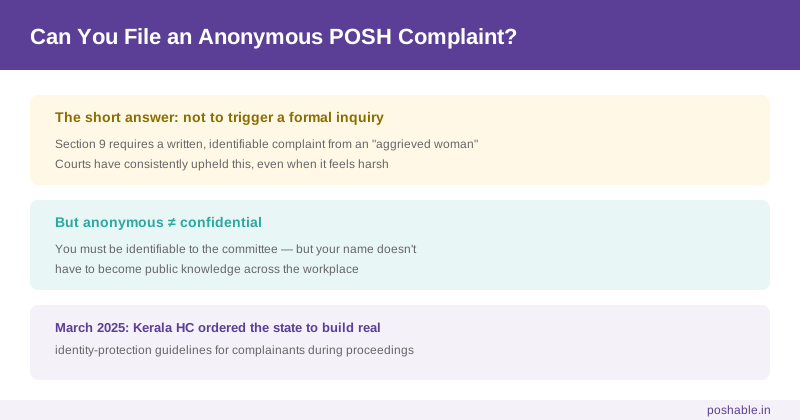
No, not if you want it to trigger a formal inquiry. Section 9 of the POSH Act, 2013 requires a written complaint from an identifiable “aggrieved woman” before an Internal Committee can open a Section 11 inquiry. This isn’t a technicality someone forgot to fix. Courts have consistently upheld it.
What Section 9 Actually Requires
The complaint must be in writing, and it must come from someone the committee can actually identify as the aggrieved woman. Where she genuinely cannot write it herself, the committee must render reasonable assistance. Someone else can also file on her behalf with her consent. However, the law never contemplated the committee acting purely on an unsigned tip with no identifiable source behind it.
Why Courts Have Insisted on This, Even When It Feels Harsh
Gujarat High Court rulings have specifically held that a formal, identifiable complaint is a precondition for an inquiry under the Act. The reasoning connects directly to natural justice: a respondent facing serious allegations needs to know who is accusing him of what, to mount any real defense at all. An inquiry built entirely on an anonymous source has no way to test its credibility. This would put fairness to the accused at genuine risk.
An Anonymous POSH Complaint vs. Anonymity During the Process
This is where most of the confusion actually lives. Anonymous means the committee itself doesn’t know who you are. Confidential means the committee knows exactly who you are, but that information doesn’t spread beyond the people who genuinely need it. Section 16 confidentiality protects the second kind of privacy, not the first.
A 2025 Case That Actually Strengthens Complainant Protection
In Thomas Antony v. State of Kerala (2025), the Kerala High Court addressed this directly. It directed the state government to formulate concrete guidelines for anonymizing a complainant’s identity during POSH inquiry proceedings. This case doesn’t touch whether an anonymous complaint can start an inquiry. It addresses something arguably more useful: making sure an identified complainant’s name doesn’t circulate needlessly once the process is already underway.
What Happens If an IC Receives a Truly Anonymous Tip
A committee cannot simply ignore a serious tip, even an anonymous one, from a duty-of-care standpoint. However, it also cannot open a formal Section 11 inquiry on that basis alone. In practice, a well-run committee acknowledges the tip and explains it cannot proceed formally without an identifiable complaint. It then invites the person to come forward through a proper channel with confidentiality protections clearly explained.
The Real Difference Between Anonymous and Confidential
Anonymous protects you from the committee itself knowing who you are. However, this also strips the process of the accountability it needs to function fairly. Confidential protects you from your colleagues, your manager, and the broader workplace knowing, while still letting a real inquiry actually happen. For nearly everyone weighing whether to come forward, confidential is the protection that actually matters.
Anonymous POSH Complaint Fears: What Actually Helps
- Ask the committee directly how information gets restricted before you file anything formally
- Request that only the specific committee members handling your case see your identity
- Confirm what happens to your name if the matter proceeds to appeal or litigation later
- Understand that retaliation protections apply regardless of how widely your identity is known internally
Practical Options If You’re Not Ready to Be Named Yet
Talking informally to a trusted committee member first, before filing anything formal, is generally allowed and doesn’t commit you to anything. Many organizations also offer a genuinely confidential pre-complaint conversation specifically for this reason. Consequently, “not ready yet” doesn’t have to mean staying silent entirely. It can mean taking a smaller first step.
What Employers Should Build Into Their Reporting Channels
A written POSH policy should explain this distinction clearly, rather than leaving employees to assume anonymous and confidential mean the same thing. Employers should also train committees on exactly how to handle an anonymous tip that doesn’t meet Section 9’s requirements. This way, nobody improvises an inconsistent response under pressure.
Conclusion: Anonymous POSH Complaint Isn’t the Goal — Safety Is
In conclusion, an anonymous POSH complaint generally cannot open a formal inquiry, and that requirement exists for real reasons tied to fairness on both sides. Moreover, the protection that actually matters, keeping your identity restricted to the people who genuinely need it, already exists through confidentiality, not anonymity. Therefore, understanding this distinction upfront helps someone weighing whether to come forward make that decision with accurate information, not a misunderstanding about what the law actually offers. Request a demo today if your organization needs clearer guidance on building a reporting channel people genuinely trust.