
Every serious POSH question eventually circles back to unwelcome conduct, and what that single word actually means. It decides whether ordinary workplace interaction crosses into sexual harassment, and people misunderstand it more often than almost anything else in the Act.
Moreover, most of that misunderstanding follows a predictable pattern. Someone assumes their own intention should matter. It doesn’t, and understanding exactly why changes how both respondents and committees should actually think about a complaint.
What You’ll Learn in This Guide
This article covers:
- Why unwelcome conduct is the single word the entire Act turns on
- Why “I didn’t mean it that way” isn’t a real defense
- A case where “routine workplace interaction” didn’t work either
- What the reasonable woman standard actually asks
- What past consent does and doesn’t protect
Unwelcome Conduct: The Single Word the Entire Act Turns On
Section 2(n) of the POSH Act, 2013 defines sexual harassment through unwelcome physical, verbal, or non-verbal conduct of a sexual nature. Every other element, the specific type of conduct, the workplace connection, the impact on the woman, sits downstream of that single qualifying word.
Why “I Didn’t Mean It That Way” Isn’t a Defense
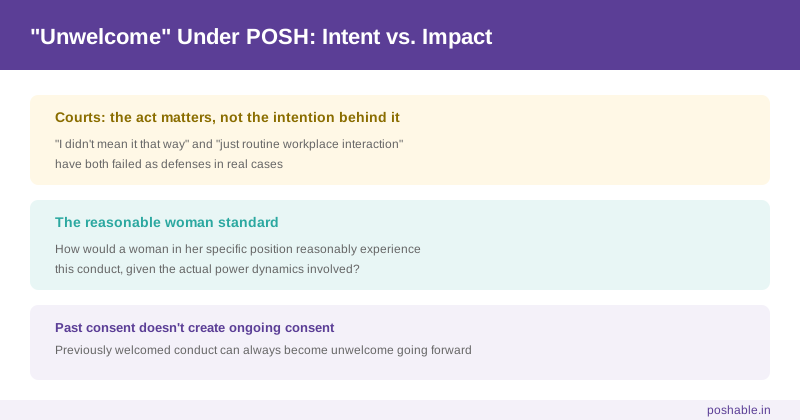
Courts have addressed this directly. A Madras High Court bench recently held that emphasis lies on the act itself, not the intention behind it. If a woman experiences particular conduct as unwelcome, inappropriate, or disturbing, it falls within the Act’s definition, regardless of what the person engaging in it claims they meant.
A Case Where “Routine Workplace Interaction” Didn’t Work Either
In HCL Technologies Ltd. v. N. Parasarathy, the Madras High Court reinstated an Internal Committee’s findings against a senior manager. He faced accusations of unwelcome physical contact, intrusive personal questions, and coercive behaviour disguised as ordinary supervision. The court rejected his defence outright. What mattered was the discomfort and intimidation the women involved actually experienced, not his claimed intention.
Unwelcome Conduct and the Reasonable Woman Standard
Indian courts assess unwelcome conduct through what’s known as the reasonable woman standard. This asks how a woman in the complainant’s specific position would reasonably experience the behaviour, given the actual power dynamics involved, rather than judging it through some generic, gender-neutral lens. Consequently, a senior manager’s comment to a junior employee gets assessed differently than the identical comment between peers, because the real context genuinely differs.
What Past Consent Doesn’t Protect
This point trips up more people than almost any other. Conduct someone previously welcomed doesn’t stay permanently welcome. A person can withdraw consent to behaviour they once accepted. Conduct that felt fine last month can become unwelcome this month, for reasons the other person may not even be aware of. Therefore, “she never objected before” carries far less weight than most respondents assume it does.
One Incident Can Be Enough
Some forms of harassment, genuinely severe or egregious conduct, only need to happen once to qualify. Other, less obviously offensive forms may build cumulatively over repeated instances. Consequently, committees shouldn’t assume a single incident is automatically too minor to constitute harassment, particularly where the conduct itself is serious.
Unwelcome Conduct in Workplace Relationships and Friendships
A prior friendship, a workplace romance, or even a past consensual relationship doesn’t create blanket immunity going forward. Each specific instance of conduct still gets assessed on its own terms. Consequently, “we’re friends” or “we used to date” explains context. It doesn’t automatically excuse conduct the other person now experiences as unwelcome.
Unwelcome Conduct: What This Means for Committees Assessing a Complaint
Committees should center their inquiry on the complainant’s actual experience and the surrounding power dynamics, not on the respondent’s stated intentions. This directly shapes how an inquiry should be run, and it’s exactly the kind of nuance genuine committee training needs to cover, not just a slide defining the statutory terms.
Common Mistakes Respondents and Committees Both Make
- Assuming good intentions automatically excuse the conduct’s actual impact
- Treating a past relationship as ongoing, unconditional consent
- Dismissing a single incident as too minor without assessing its actual severity
- Judging conduct through a generic standard instead of the complainant’s specific position
What This Means for Employees Navigating Workplace Dynamics
Someone can withdraw consent to conduct at any point, and that withdrawal doesn’t need to come with a formal warning first. This doesn’t eliminate fair process for a respondent, but it does mean assuming silence equals ongoing permission is a genuinely risky assumption to make.
Conclusion: Unwelcome Conduct Rewards Awareness, Not Assumptions
In conclusion, unwelcome conduct turns on impact, not intention, and Indian courts have said so plainly and repeatedly. Moreover, the reasonable woman standard and the reality that consent can shift over time both exist to keep the assessment grounded in how conduct is actually experienced, not how it was meant. Therefore, both employees and committees benefit from treating this concept with real precision, rather than assuming good intentions or past familiarity settle the question on their own. Request a demo today if your organization wants training that genuinely covers this distinction, not just the statutory definitions.