
The Section 25 POSH Act power gives the government a direct route into your workplace records. Many employers learn about it only when a written order arrives. However, the power is not new. Maharashtra recently showed it can be used at scale. So it pays to know what the section says and what it leaves open.
Section 25 POSH Act: What the Power Covers
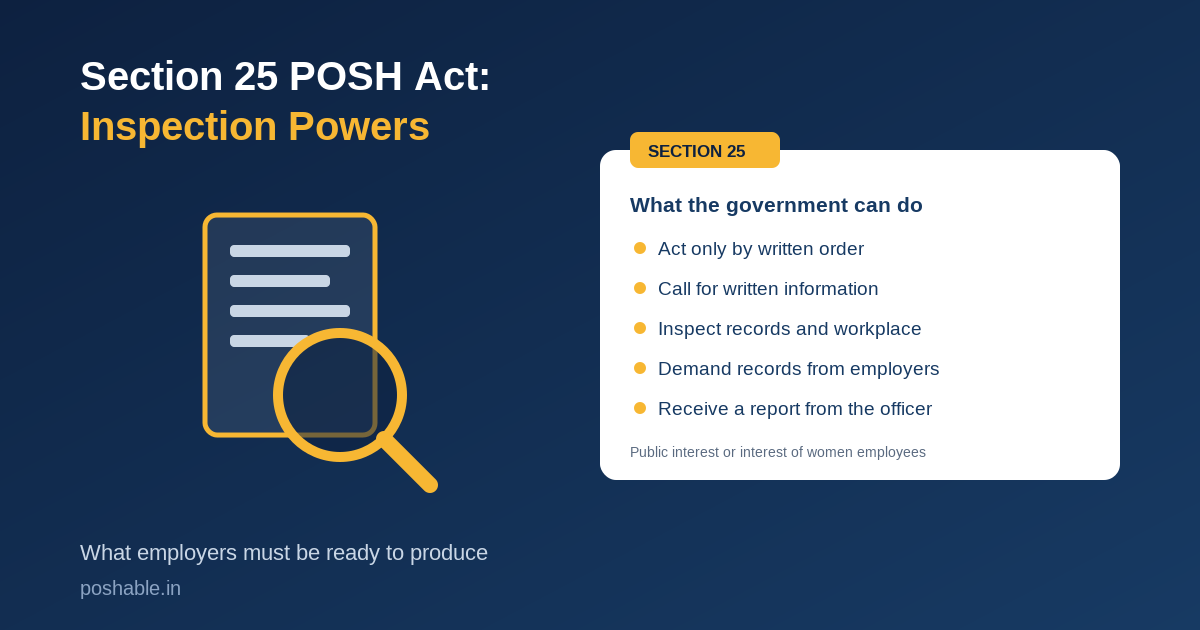
Section 25 lets the appropriate government call for information and inspect records. It can act only if it is satisfied that this is necessary in the public interest or in the interest of women employees at a workplace. Moreover, the order must be in writing.
Two powers follow. First, the government can require any employer or District Officer to give written information about sexual harassment. Second, it can authorise an officer to inspect the records and the workplace. The officer must then report within the period the order states.
Section 25 POSH Act: Your Duty to Produce Records
Section 25(2) puts the duty on you. Every employer and District Officer must produce, on demand, the information, records and documents in their custody that relate to the inspection. The section sets no deadline of its own. Therefore the written order is the first document to read. Check what it asks for and by when.
Complaint files are sensitive, so see our Section 16 confidentiality checklist before you hand anything over.
Who Is the Appropriate Government?
Under Section 2(b), the Central Government is the appropriate government for workplaces it or a Union territory administration controls or substantially funds. The State Government covers other workplaces in its territory. So most private employers will deal with the State Government.
How Sections 23 and 24 Fit In
Section 23 requires the government to monitor implementation of the Act and maintain data on cases filed and disposed of. Likewise, Section 24 lets it publicise the Act and train committee members, subject to available resources. Together they show that the government is meant to watch implementation, not just wait for complaints.
What This Means for Employers
- Keep the Internal Committee order, member list and tenure on file.
- Store complaint registers, inquiry reports and action records securely.
- Maintain training logs with dates and attendance.
- File and keep every annual report under Section 21.
- Name one person who receives and logs government orders.
Common Mistakes to Avoid
- Ignoring a written order because it looks routine.
- Handing over complaint files without first taking legal advice on Section 16 confidentiality.
- Missing the reporting period stated in the order.
- Assuming the section applies only in Maharashtra.
- Keeping records scattered across HR, legal and email.
Penalties and Section 26
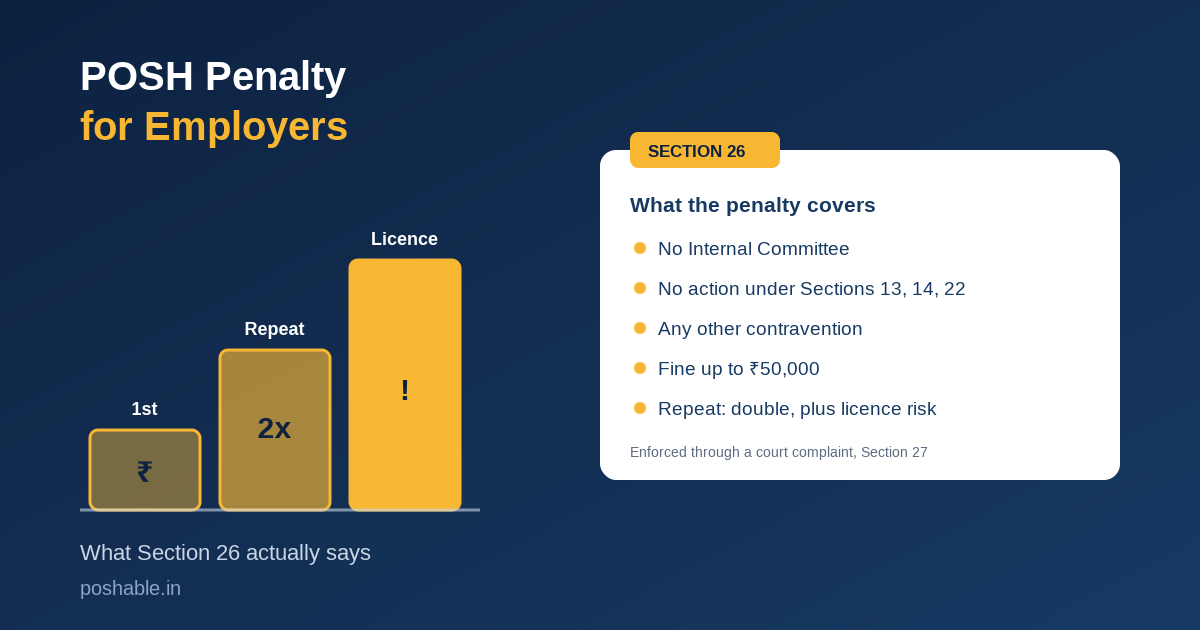
Section 25 names no penalty. However, Section 26 punishes failure to constitute an Internal Committee, failure to act under Sections 13, 14 or 22, and contravention of other provisions. The fine can reach ₹50,000, and a repeat offence can double it and put licences at risk. So an inspection that finds a gap can lead to action under that section. Whether refusing to produce records is itself covered is a question for legal advice. Our guide to Section 26 penalties explains the details.
Section 25 POSH Act in Practice: Maharashtra
Maharashtra used this power in May 2026 to begin checklist-based inspections. Read our Maharashtra inspection circular post to see what inspectors check. Then test yourself with our POSH audit checklist. Your annual report is another record to keep ready, so see our Section 21 annual report checklist.
Build a Records File Before the Order Arrives
Create one inspection file. Index each document and name its owner. Review it every quarter. Moreover, tell your HR and legal teams who receives government orders, so none sits unread. A tidy file costs an afternoon. By contrast, a scramble during an inspection costs far more.
This post is general information, not legal advice. You can read the full text of the Act on Courtbook. If you want help building your inspection file, Request a demo today and our team will walk you through it.